Unchecked call return value
The boolean returned by a low-level call is discarded, so failures pass silently.
What it is
call, delegatecall and send return a boolean rather than reverting on failure. Ignoring that value means execution continues as though the call succeeded. The same applies to ERC-20 transfers: some tokens return false instead of reverting, and some return nothing at all.
Why it matters
Your contract records a payment that never arrived, or credits a deposit for tokens it never received. The accounting and the actual balances diverge, quietly, until someone notices the gap.
The vulnerable pattern
A failed send is indistinguishable from a successful one.
msg.sender.send(amount);          // returns false, ignored
token.transfer(recipient, amount); // may return false
The fix, in code
Check the result, or use a wrapper that reverts for you.
(bool ok, ) = msg.sender.call{value: amount}("");
require(ok, "transfer failed");

SafeERC20.safeTransfer(token, recipient, amount);
How to fix it
- Capture and require the return value of every low-level call.
- Use SafeERC20 for token transfers so non-standard tokens are handled.
- Remember that a failing transfer inside a loop can block every other recipient — prefer pull payments.
How it is detected
Every audit on EVM Smart Audit checks for SWC-104 and reports it as passed or flagged in the standards coverage grid — so the report tells you it was checked even when nothing was found. See the detector suite for what else runs alongside it, or the full database for the other 21 checks.
Check your contract for unchecked call return value
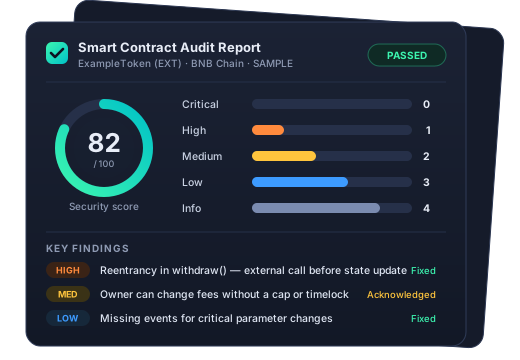
The engine runs this check and 21 others on every audit, and shows what passed as well as what failed.
 View sample report (PDF) ›
 Start audit